Juba, South Sudan – November 25, 2025
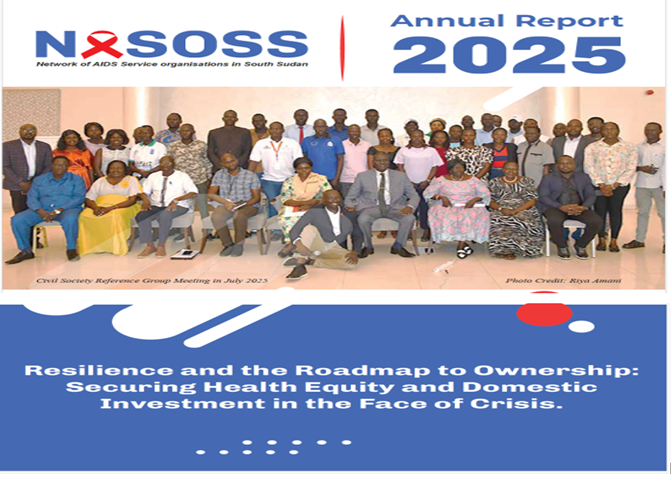
The Network of AIDS and Health Service Organizations of South Sudan (NASOSS) today launched its 2025 Annual Report, titled “Resilience and the Roadmap to Ownership: Securing Health Equity and Domestic Investment in the Face of Crisis”. Launched in Juba during the network’s 7th Annual General Meeting (AGM), the report highlights both significant progress in the HIV and health response and a dire warning about the sustainability of the sector amid a critical funding shortfall.
The report sets a new strategic direction for NASOSS under the proposed vision: “Inclusive Health Systems, Healthy Communities”. The document underscores the urgent need for South Sudan to transition from over-reliance on external aid to robust domestic financing.
The Looming Crisis and the Call to Action
The 2025 reporting period was marked by a severe funding crisis, notably triggered by the US Stop Work Order (SWO) in January, which abruptly affected critical community-led programs like the LIFT UP project. This crisis has amplified the call for national ownership of the health agenda.
NASOSS has strongly advocated for decisive policy action, urging the government to adhere to the commitments of the Abuja Declaration by allocating 15% of the national budget to the health sector. Furthermore, the network is pressing for the establishment of the National Health Insurance Scheme (NHIS) and capitalizing on Public-Private Partnerships to mobilize sustainable resources.
Resilience and Key Achievements
Despite the challenges, the report showcased significant achievements driven by the collective effort of Civil Society Organizations (CSOs) and partners:
- Increased HIV Status Awareness: The dedication of stakeholders is evidenced by an increment of 55% in the number of people who know their HIV status, according to the 2025 Spectrum estimates.
- CSO Empowerment: NASOSS achieved a major milestone by successfully taking part in the endorsement of the National Empowerment of Positive Women United (NEPWU) as a Sub-Recipient (SR) for the Global Fund. This marks a significant step for CSOs in securing direct implementation roles.
Addressing Structural Barriers
The report also shone a spotlight on persistent structural barriers that undermine public health efforts. NASOSS noted the “continued existence of legal and structural barriers” that enable harassment and forced testing of Key Populations (KP), which actively discourages service seeking. The network remains committed to Community-Led Monitoring (CLM) to ensure transparent and accountable service delivery while addressing these critical human rights issues.
The launch emphasized NASOSS’s commitment to empowering and coordinating CSOs in South Sudan to create healthy, resilient communities free from the burden of HIV, TB, Viral Hepatitis, Malaria, and other associated diseases and conditions.