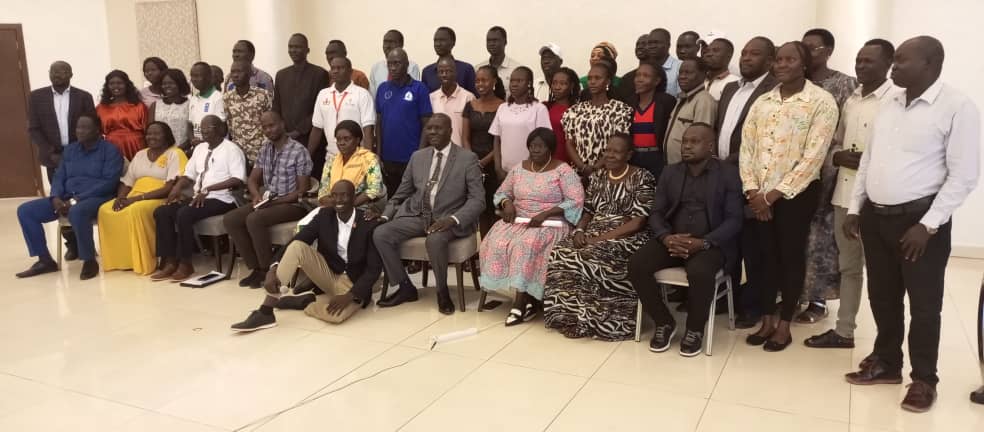
Juba, South Sudan – July 25, 2025 – South Sudan’s health system is facing a critical juncture. A new position paper, released by the Civil Society Reference Group (CSRG) following their July 24th-25th meeting in Juba, sounds the alarm on declining international funding for HIV, TB, and Malaria responses. The message is clear:
sustainable domestic health financing is no longer an option, it’s an urgent imperative!
For over a decade, international partners like the Global Fund and PEPFAR have been instrumental in supporting critical health services in South Sudan. However, global funding is now on a downward trend, exemplified by a recent $7 million cut by the Global Fund Grant Cycle 7 and a US President’s executive order pausing foreign development assistance. This shift threatens to unravel hard-won gains, particularly imperiling vital community-led interventions (CLIs) such as Community-Led Monitoring (CLM), Orphans and Vulnerable Children (OVC) programs, and Key Populations (KP)/Adolescent Girls and Young Women (AGYW) programs.
[Picture Idea: A compelling image representing community health work or a healthcare facility in South Sudan. Perhaps a photo of community health workers interacting with people, or a medical professional with a patient.]
The Stakes Are High!
Failure to act decisively will lead to a catastrophic resurgence of public health challenges, undermining national development and rendering the vision to end public health threats like AIDS, TB, and Malaria by 2030 unattainable. The cessation of these crucial community programs can result in treatment interruptions, increased viral loads, new infections, and economic hardships.
A Roadmap for a Healthier South Sudan
The CSRG meeting has laid out a strategic roadmap for robust domestic health financing, urging high-level decision-makers within the Ministry of Health (MOH), South Sudan AIDS Commission (SSAC), Ministry of Finance, and Revitalized Transitional National Legislative Assembly (RTNLA) to commit to these vital strategies:
- Boost Health Budget to 15%: The paper calls for an immediate and substantial increase in government budgetary allocation to the health sector, targeting at least 15% of the 2025/2026 national budget, in line with the Abuja Declaration. Historically, South Sudan’s health budget has been critically low, ranging from 1.3% to 7.9% in recent fiscal years.
- Implement Health-Specific Taxes: Expedite the legislative approval and implementation of earmarked taxes on items like tobacco, alcohol, sugary drinks, digital levies, and property taxes to generate predictable revenue specifically for health.
- Accelerate National Health Insurance Scheme: Rapidly approve and implement a national health insurance scheme to provide crucial financial protection and reduce out-of-pocket spending for all citizens.
- Formalize Private Sector Engagement: Develop a national strategy to formalize private sector involvement, including institutionalizing Corporate Social Responsibility (CSR) frameworks to leverage private capital, innovation, and efficiencies.
- Protect Community-Led Interventions: Critically ensure the sustained protection and scaling up of vital community-led interventions, recognizing their indispensable role in reaching vulnerable populations and fostering a comprehensive public health response.
- Strengthen Medical Supply Chains & Human Resources: Invest in robust systems for tracking medicine stocks, preventing stockouts, and increasing recruitment and training of healthcare staff with an emphasis on stigma reduction.
- Enforce Free-Service Policy: Rigorously enforce zero-tolerance policies on informal charges and user fees within health facilities, establishing robust grievance redress mechanisms and enhancing public accountability.
- Strategic Advocacy & Public Awareness: Maintain continuous, high-level advocacy efforts and strategically engage diverse media platforms to educate the public and build support for these initiatives.
The Time for Action is NOW!
South Sudan is at a pivotal moment. The decline in international funding, coupled with the ongoing threat to essential community-led interventions, presents an urgent and undeniable imperative for robust domestic action. By embracing these strategies, South Sudan can build a resilient, self-sustaining health system, safeguarding the future of its citizens and ensuring progress towards the 2030 health goals.